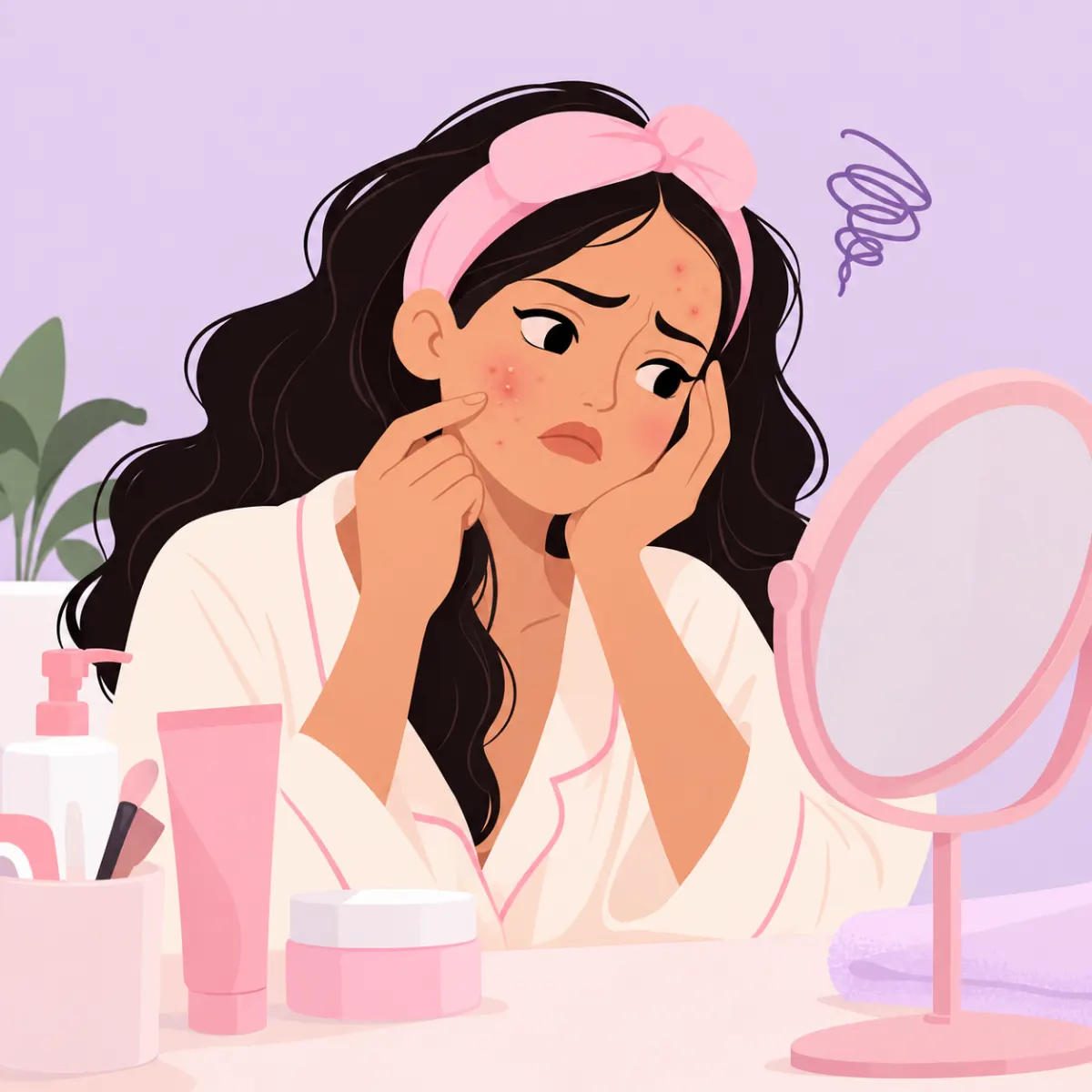
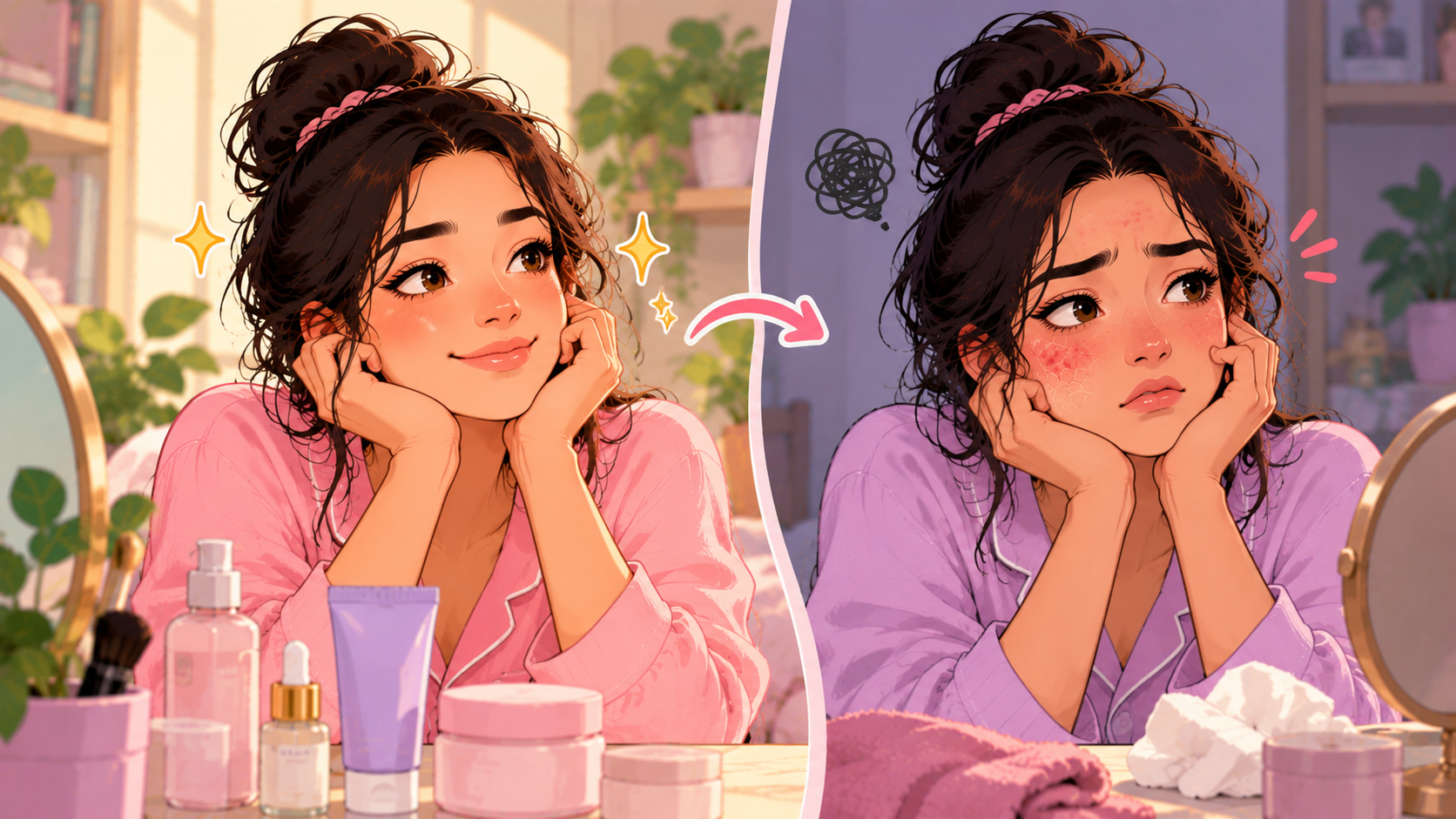
Yesterday:
“My skin looks pretty good!” ✨
Today:
“Excuse me… WHO invited you?” 😭
One tiny bump.
A little extra dryness.
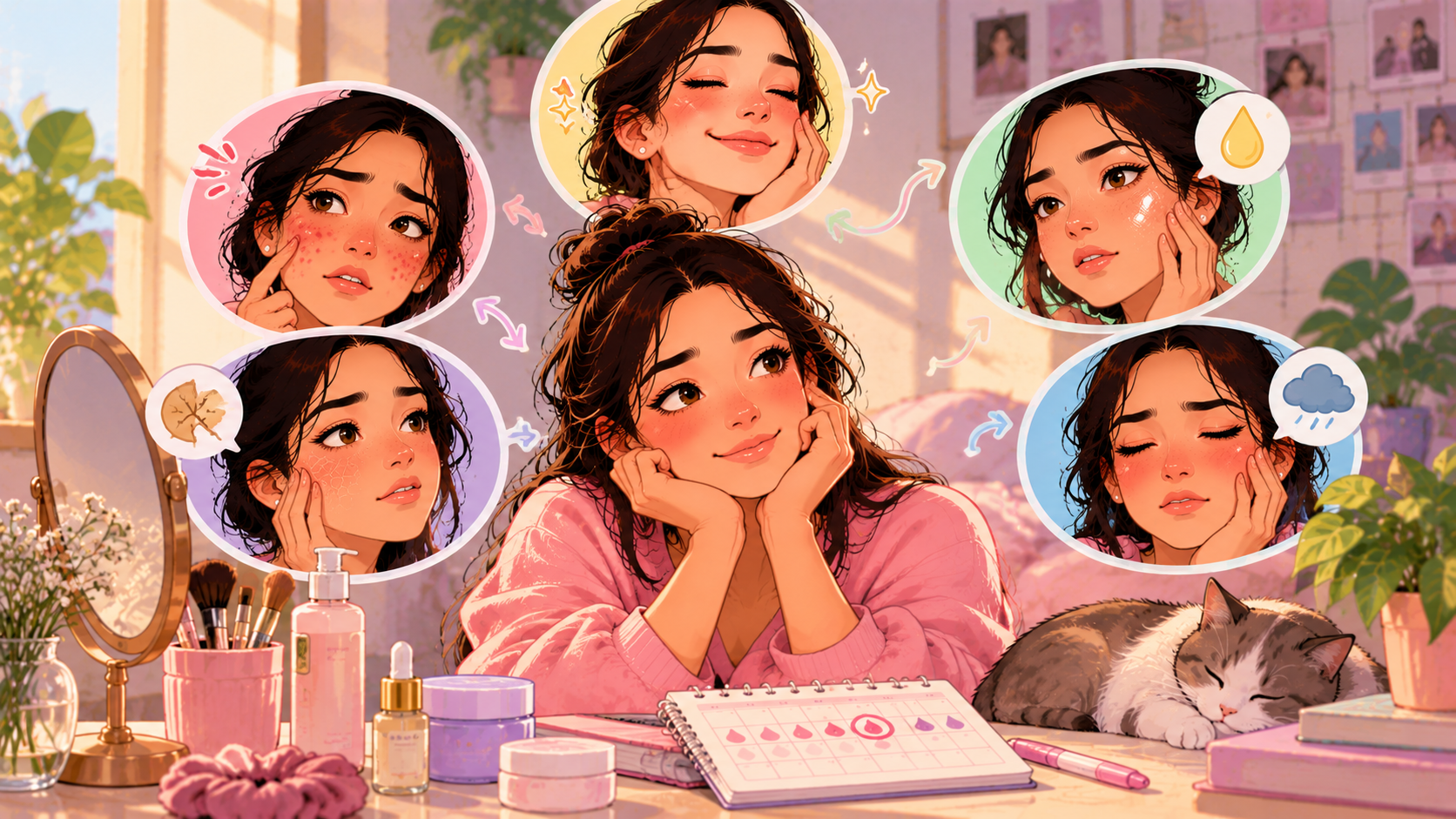
Maybe your skin suddenly feels different.
And you're standing in front of the mirror trying to figure out what happened overnight.
But sometimes your skin can change along with your menstrual cycle too.
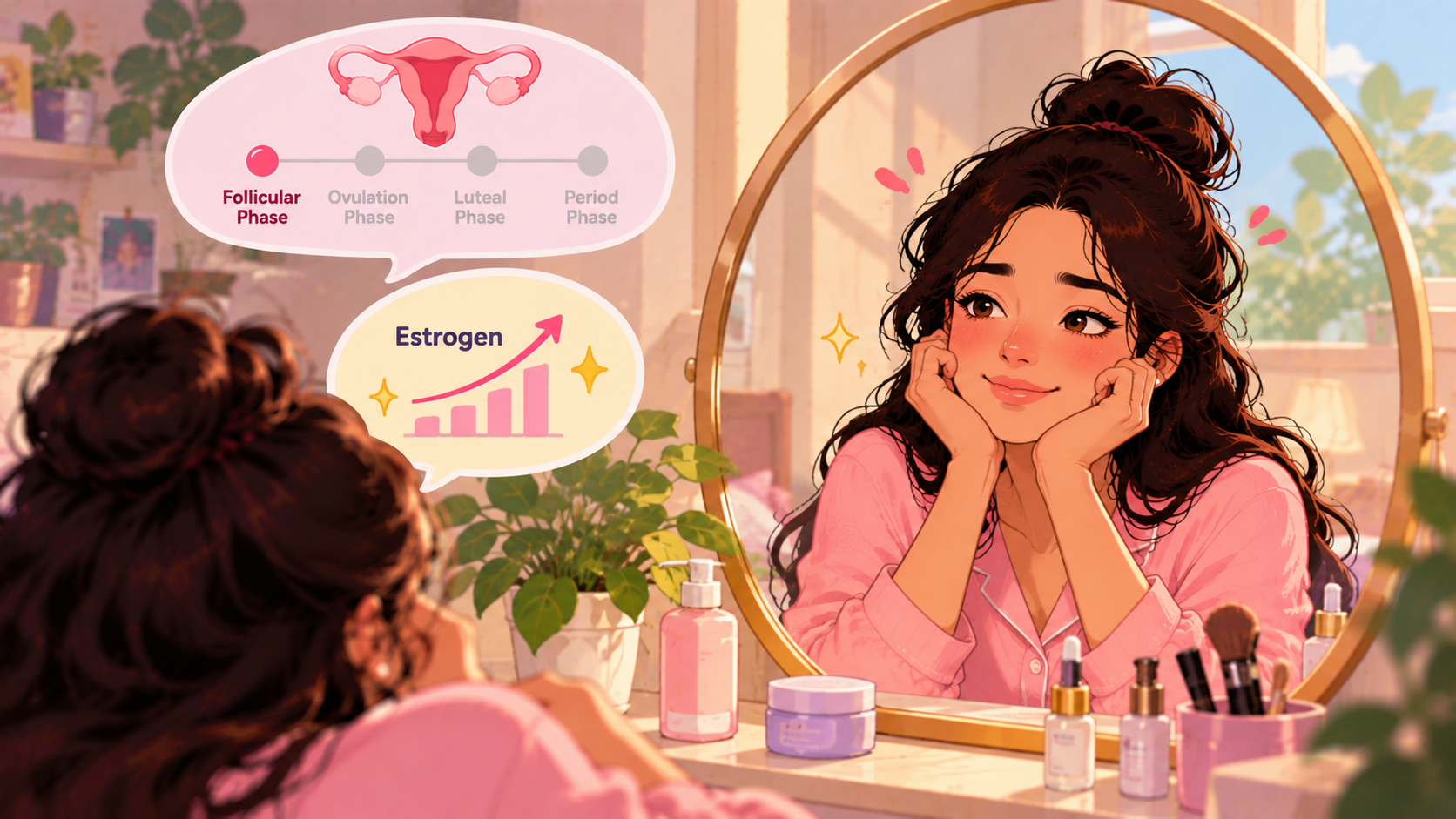
🌱 Welcome to the Follicular Phase
The Follicular Phase begins on the first day of your period and continues until ovulation.
As you move through this phase, estrogen generally starts to rise.
Some people notice their skin feels different as the phase progresses perhaps less dull, more comfortable, or simply not quite the same as it felt during their period.
But here's the catch:
Your skin doesn't have to follow a perfect cycle calendar.
Your skin can also respond to sleep, stress, weather, skincare products, hydration and many other things.
So don't panic if your face doesn't suddenly look like a skincare advertisement. 😂
👀 Start noticing your own skin pattern
Instead of asking:
“Why does my skin look different today?”
try asking:
“Where am I in my cycle?”
And then notice:
✨ Does my skin feel dry or comfortable?
✨ Does it look more oily than usual?
✨ Am I noticing new breakouts?
✨ Does my skin feel more sensitive?
✨ Did anything else change like sleep, stress or skincare?
You might eventually notice that your skin has its own little cycle pattern.
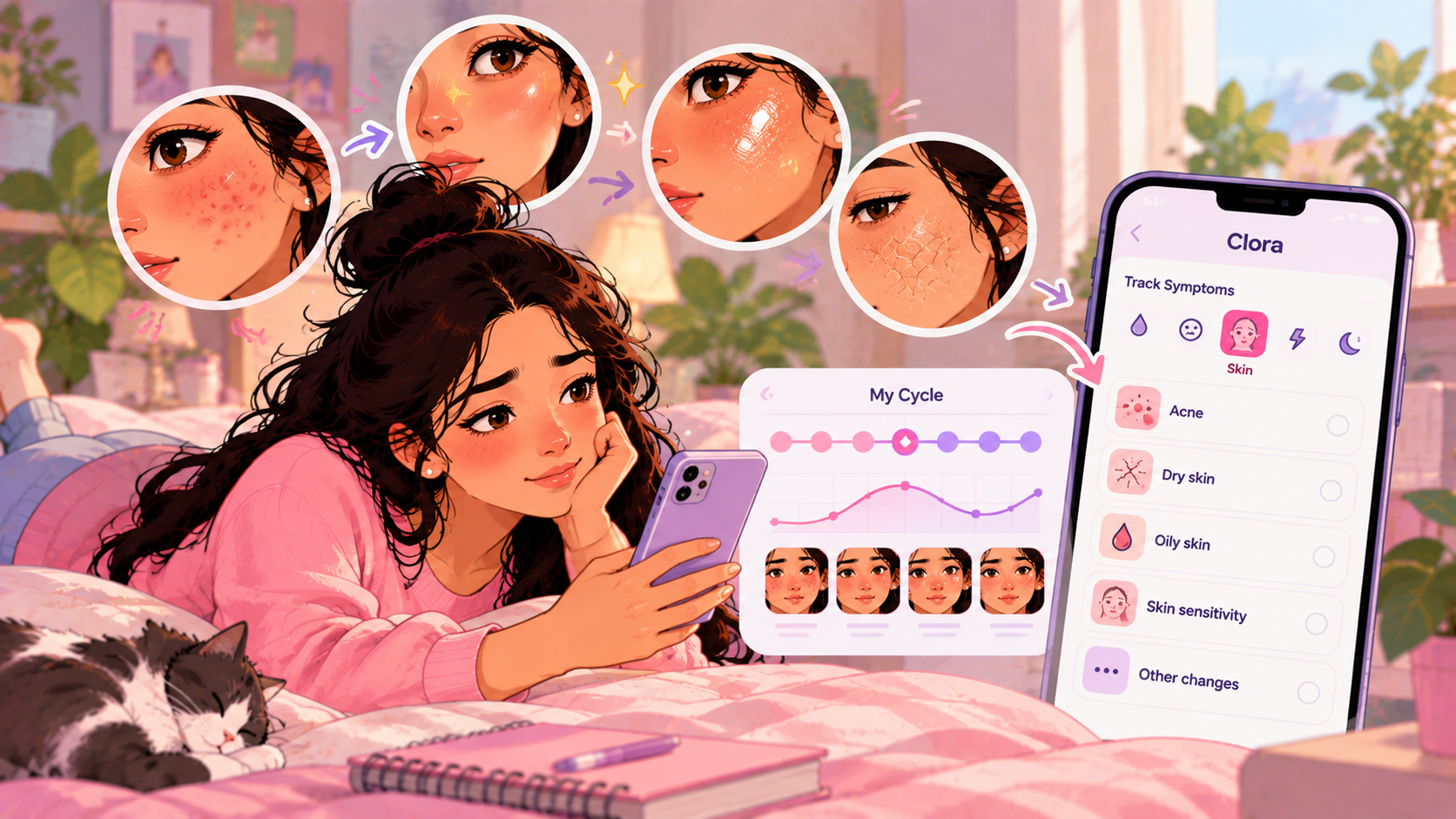
📱 Your skin can become another cycle clue
In Clora, you can track Acne and other skin changes alongside your cycle.
You may discover:
“My skin usually feels different during my Follicular Phase.”
Or:
“Actually, my breakouts have nothing to do with my cycle.”
Both are useful things to know.
Because the goal isn't to blame every pimple or dry patch on hormones.
It's to understand your own pattern.
💗 Your skin doesn't need to be perfect
Some days your skin will cooperate.
Some days it will wake up and choose chaos.
That's okay. 😂
Your menstrual cycle is only one piece of the puzzle.
So instead of fighting every little change, start observing it.
Because sometimes your skin isn't being dramatic.
It's just giving you another clue about what your body is doing. 🌱✨