Prepare before the call
Organize cycle dates, symptoms, medications, allergies, pregnancy status, test reports, and the main concern you want to discuss.

Clora Care Guide
An online gynecologist consultation lets you discuss periods, PCOS, discharge, contraception, pregnancy questions or menopause with a qualified doctor over video, audio or chat — without travelling to a clinic. Here's what telemedicine can and can't handle, what a consultation actually involves in India, and how to prepare so you get real answers.
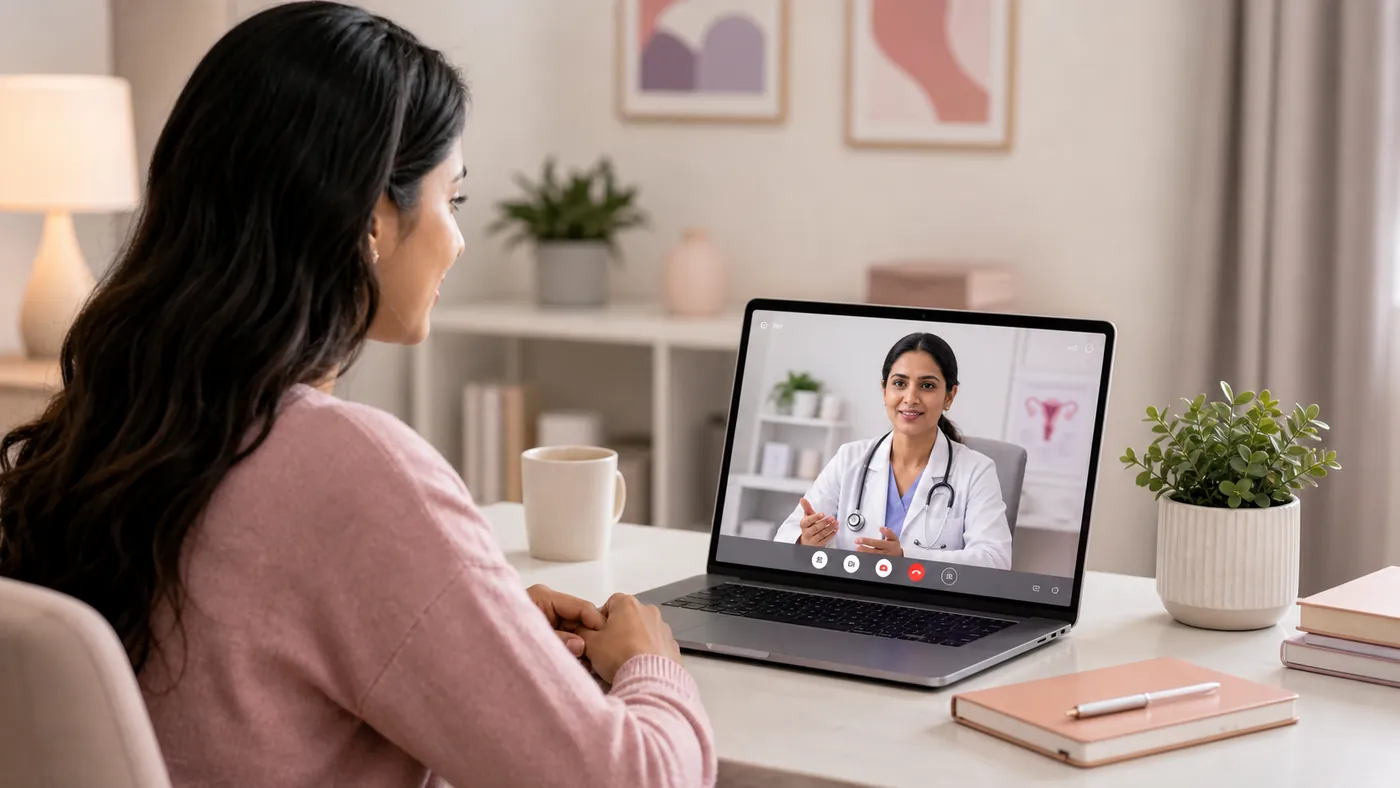
Organize cycle dates, symptoms, medications, allergies, pregnancy status, test reports, and the main concern you want to discuss.
Online consultation may not be suitable for emergencies, severe pain, heavy bleeding, fainting, or symptoms needing physical examination.
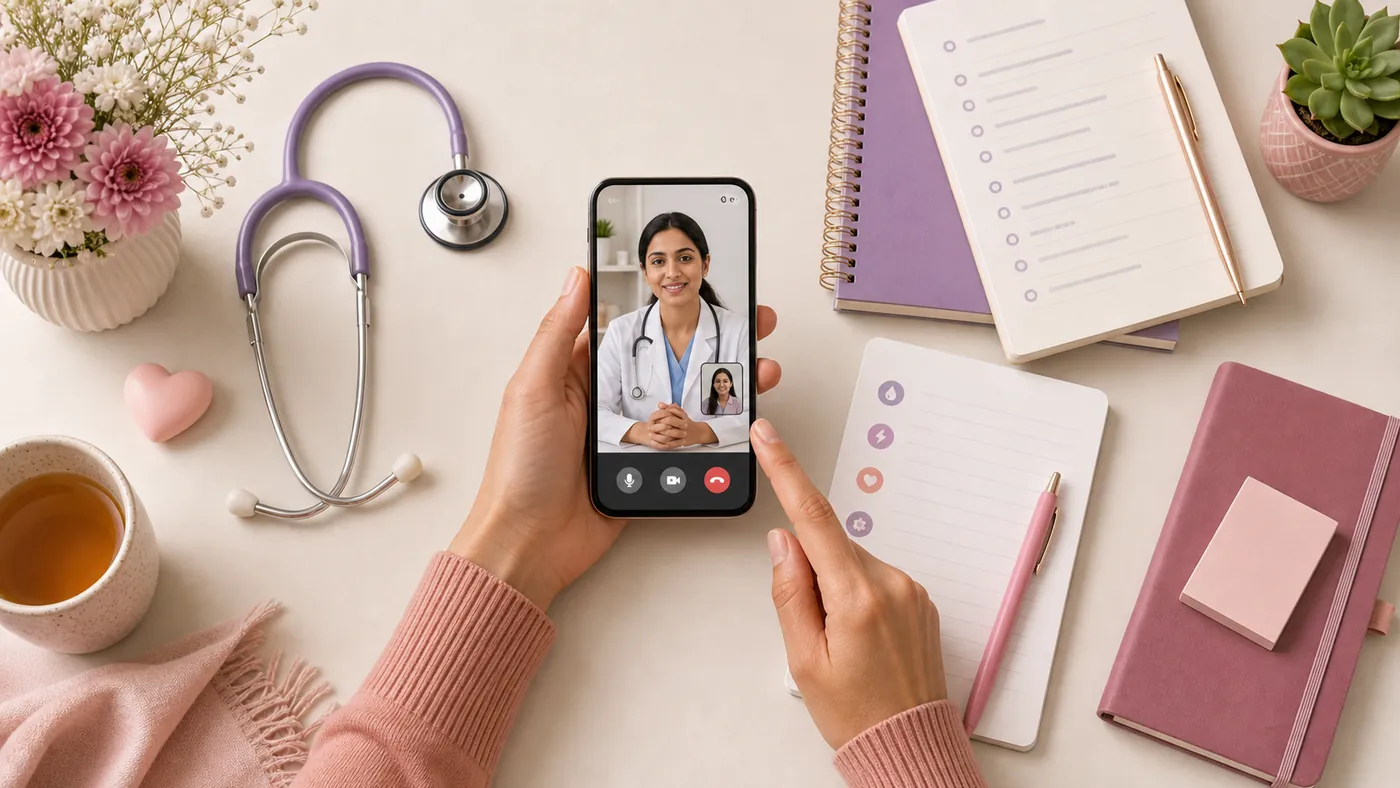
After consultations, Clora can help users remember next steps, lab tests, follow-ups, medicine questions, and lifestyle advice discussed with doctors.
Telehealth has become a genuinely useful part of gynecological care, not just a pandemic-era stopgap. It works particularly well for discussing period irregularities and PCOS management, reviewing contraception options, following up on PMS or PMDD, managing menopause and perimenopause symptoms, going over lab results, answering medication questions, and routine follow-up visits after an initial in-person diagnosis. Research on telehealth in obstetrics and gynecology has found it can offer outcomes comparable to in-person care for many of these situations, without compromising the doctor-patient relationship.
Teleconsultation has real limits, and knowing them matters. Pelvic exams, Pap smears, and ultrasounds can't be done remotely. Suspected infections that need a physical exam or swab, heavy or unusual bleeding, severe pelvic pain, and any symptoms that feel urgent or emergency-level all need in-person evaluation, not a video call. A good telehealth provider will tell you when it's time to come in rather than trying to manage everything remotely.
Most consultations follow the same shape regardless of platform. You book a slot and describe your main concern in a short form. At the appointed time you join by video, audio or chat. The doctor asks about your symptoms, cycle history, medications and relevant medical background — usually the first five minutes. You discuss what's going on and what the likely explanations are. If the doctor needs more information, they may order lab tests or a scan, or ask you to come in for a physical examination. If medication is appropriate, they issue a prescription and explain the next steps. Many platforms then send you a written summary and prescription you can download.
A typical consultation runs 10 to 15 minutes, which is short. That is exactly why preparation matters: the more clearly you can state your cycle dates, symptom timeline and main question up front, the more of that time goes to actual advice rather than history-taking.
Online medical consultation in India is governed by the Telemedicine Practice Guidelines issued in 2020 under the Indian Medical Council Act, now administered by the National Medical Commission (NMC). A few things in those guidelines are worth knowing as a patient:
Practically, this means you're entitled to ask for a doctor's registration number, and you should be cautious of any service that won't provide one or that promises prescriptions for anything without a consultation.
Telehealth suits questions that are primarily about history, pattern and management rather than physical findings. The most common reasons include irregular or missed periods, heavy or painful periods, suspected or diagnosed PCOS/PCOD and its ongoing management, changes in vaginal discharge, contraception choices and switching methods, early pregnancy questions, fertility and ovulation timing, perimenopause and menopause symptoms, PMS and mood changes across the cycle, and reviewing lab or scan reports you've already had done.
A growing number of women's health apps — Clora included — offer AI-powered conversations that help you understand symptoms and organise what you're experiencing. This is genuinely useful for learning what's typical, spotting patterns across cycles, and working out what to raise with a clinician. It is not the same thing as a medical consultation, and it should not be treated as one.
An AI companion cannot examine you, cannot order tests, cannot diagnose a condition, and cannot prescribe. What it can do well is help you arrive at a consultation already knowing your cycle dates, symptom timeline and the specific question you want answered — which, given how short most consultations are, materially changes how much you get out of them. Treat AI guidance as preparation and education; treat a registered doctor as the person who diagnoses and treats.
Reputable telehealth platforms use encrypted connections and are bound by the same confidentiality standards as in-person care. Before your first consultation on any platform, it's reasonable to check how your data is stored, who has access to your consultation records, and whether the doctor you're speaking with is verified and licensed. If you'd prefer to speak with a female gynecologist, most platforms let you filter by doctor gender before booking — it's a reasonable thing to ask for and shouldn't require explanation.
When to skip teleconsultation and seek in-person or emergency care
Go to a clinic or emergency room directly for heavy bleeding that's soaking through protection hourly, severe abdominal or pelvic pain, fainting or dizziness, high fever with pelvic pain, or any symptom that feels sudden and severe rather than something to discuss and monitor.
How Clora Helps
Clora combines health tracking, AI-powered conversations with Clo, gynecology teleconsultation readiness, lab test context, medicine support, and personalized wellness insights in one women's health ecosystem.
Questions
Teleconsultations work well for discussing period irregularities, PCOS management, contraception questions, PMS/PMDD, menopause symptoms, reviewing lab reports, medication questions, and routine follow-ups.
Pelvic exams, Pap smears, ultrasounds, suspected infections requiring a physical exam or swab, heavy or unusual bleeding, severe pain, and any emergency symptoms need in-person evaluation.
Have your cycle dates, symptoms, current medications, allergies, and any recent lab reports ready, and write down your main question or concern beforehand so you don't forget it during the call.
For many gynecological concerns, particularly follow-ups, medication management, and symptom discussions, research suggests telehealth provides comparable outcomes to in-person visits, though it doesn't replace physical examination when one is needed.
Reputable telehealth platforms use encrypted, secure connections and are bound by the same confidentiality standards as in-person care. It's worth confirming a platform's privacy practices before your first consultation.
No. Some symptoms require in-person examination, emergency care, or diagnostic tests.
Healthcare professionals accessible through Clora are independent providers responsible for their own clinical advice.
Some platforms offer a free first query, a limited chat window, or free follow-up within a set period after a paid consultation, but a full consultation with a registered gynecologist is generally a paid service. Be cautious of anything offering prescriptions without a consultation — that isn't permitted under India's telemedicine guidelines. Free AI symptom guidance, which many apps including Clora provide, is a different thing from a doctor consultation.
Yes. Under the Telemedicine Practice Guidelines, a registered medical practitioner can issue a valid prescription following a teleconsultation. However, certain restricted categories of medication cannot be prescribed remotely, and the doctor must judge whether your condition can be assessed adequately without a physical examination.
Ask for their registration number with the National Medical Commission or a State Medical Council, which is publicly verifiable. Under India's telemedicine guidelines, a doctor is required to identify themselves at the start of a consultation. A legitimate platform will show the doctor's qualifications and registration rather than hiding them.
Yes. Most telehealth platforms let you filter by doctor gender when booking. You don't need to justify the preference.
No. AI chat can help you understand symptoms, track patterns across cycles and prepare questions, but it cannot examine you, order tests, diagnose a condition or prescribe medication. Use it as preparation and education, and see a registered doctor for diagnosis and treatment.