Understand ovulation patterns
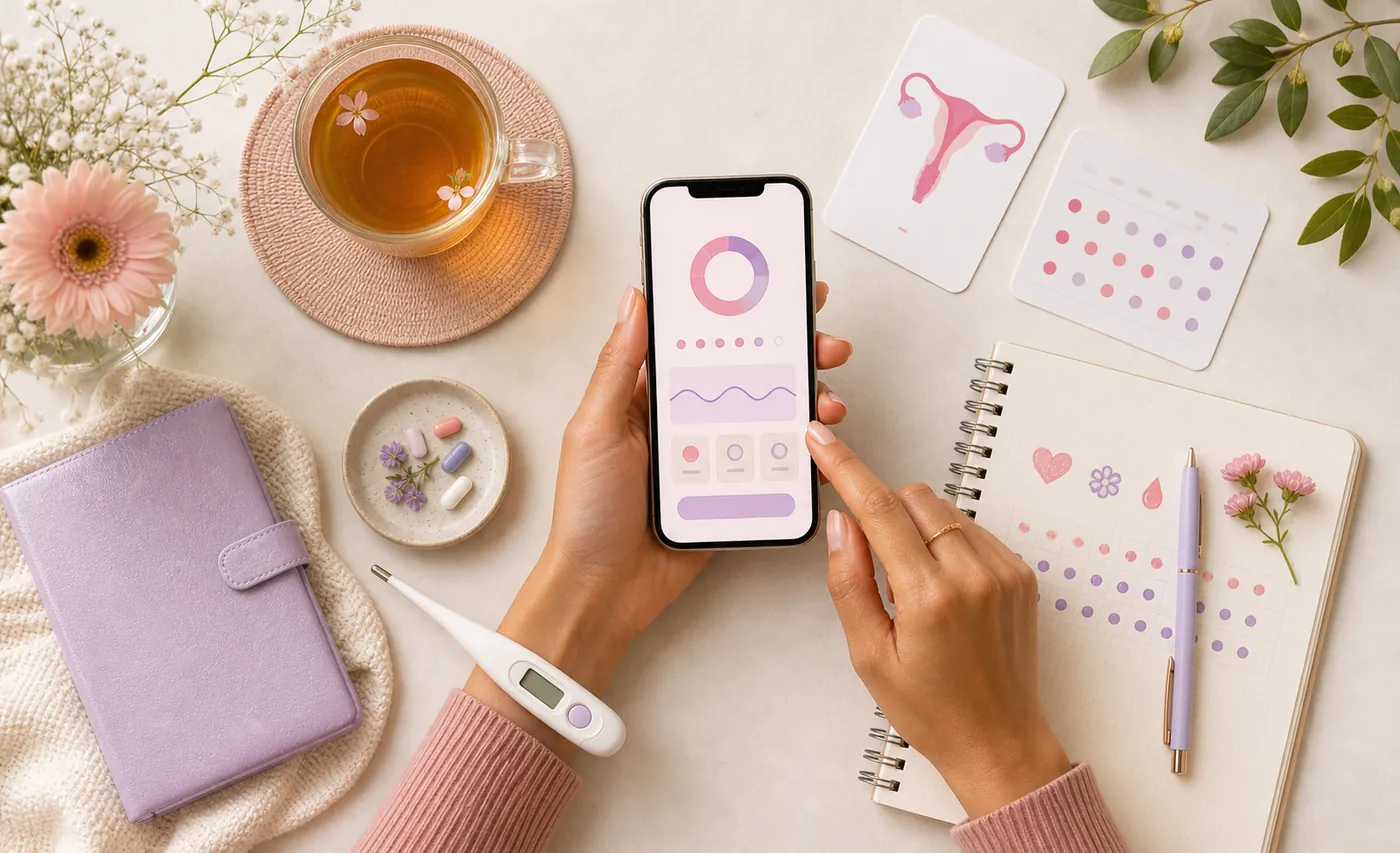
Track cycle length, cervical mucus notes, symptoms, temperature context, period history, and other signals that may help identify fertile windows.

Clora Care Guide
Fertility awareness starts with understanding your body. Clora helps users track ovulation signals, cycle regularity, symptoms, and patterns that can support pregnancy planning and timely medical conversations.

Track cycle length, cervical mucus notes, symptoms, temperature context, period history, and other signals that may help identify fertile windows.
Clora helps organize questions around cycle regularity, missed periods, PCOS, medications, lab tests, and when to consult a fertility specialist.
Fertility predictions are estimates. They should not replace medical advice, contraception guidance, infertility evaluation, or IVF consultation.
Ovulation is the release of a mature egg from an ovary, typically once per cycle. In an average 28-day cycle, it happens around day 14, but the exact timing depends entirely on your own cycle length — it's generally about 14 days before your next period starts, whatever that interval is for you. Once released, an egg survives for only 12 to 24 hours, which is why timing matters so much for conception.
Because sperm can survive in the reproductive tract for 3 to 5 days, while the egg itself survives only 12 to 24 hours after release, the fertile window spans roughly the 5 days before ovulation through the day of ovulation. Having intercourse regularly during this window — rather than trying to pinpoint the exact day of ovulation — is generally considered the most effective approach for those trying to conceive.
Regular ovulation depends on a delicate hormonal balance, and several things can disrupt it: PCOD/PCOS (one of the most common causes of irregular ovulation), thyroid dysfunction, very high or low body weight, excessive exercise, high stress, and the natural transition of perimenopause. A cycle that's shorter than 21 days, longer than 35 days, or missing altogether is often a sign that ovulation isn't happening predictably, or at all.
When to see a fertility specialist
Under age 35, it's generally reasonable to try for at least a year before seeking evaluation. Between 35 and 40, consider seeing a doctor after 6 months of trying. If you're over 40, or have a known condition like PCOS, endometriosis, irregular cycles, or a history of pelvic inflammatory disease or repeated miscarriage, earlier evaluation is usually recommended.
How Clora Helps
Clora combines health tracking, AI-powered conversations with Clo, gynecology teleconsultation readiness, lab test context, medicine support, and personalized wellness insights in one women's health ecosystem.
Questions
Common signs include a slight rise in basal body temperature, clearer and stretchier cervical mucus, mild one-sided pelvic twinges, and a positive result on an ovulation predictor kit that detects the LH hormone surge.
The fertile window is roughly the 5 days before ovulation through the day of ovulation itself, since sperm can survive in the reproductive tract for 3 to 5 days while the egg survives for only 12 to 24 hours after release.
Under age 35, doctors generally recommend trying for at least a year before evaluation. Between 35 and 40, consider seeing a doctor after 6 months. Over 40, or with known conditions like PCOS, endometriosis, or irregular cycles, earlier evaluation is often recommended.
PCOS, thyroid disorders, very high or low body weight, extreme stress, and perimenopause can all disrupt regular ovulation. A menstrual cycle that's shorter than 21 days, longer than 35 days, or absent altogether can be a sign that ovulation isn't happening regularly.
No. Tracking is genuinely useful for identifying patterns and fertile windows, but it can't diagnose the underlying cause of irregular ovulation or infertility — that requires clinical testing.
Yes. Fertility gradually declines with age, more noticeably after the mid-30s, due to a natural decrease in both the number and quality of eggs. This is one reason doctors recommend earlier evaluation for people over 35.
No. Ovulation can vary across cycles, and app predictions are only educational estimates.