Choose safe period routines
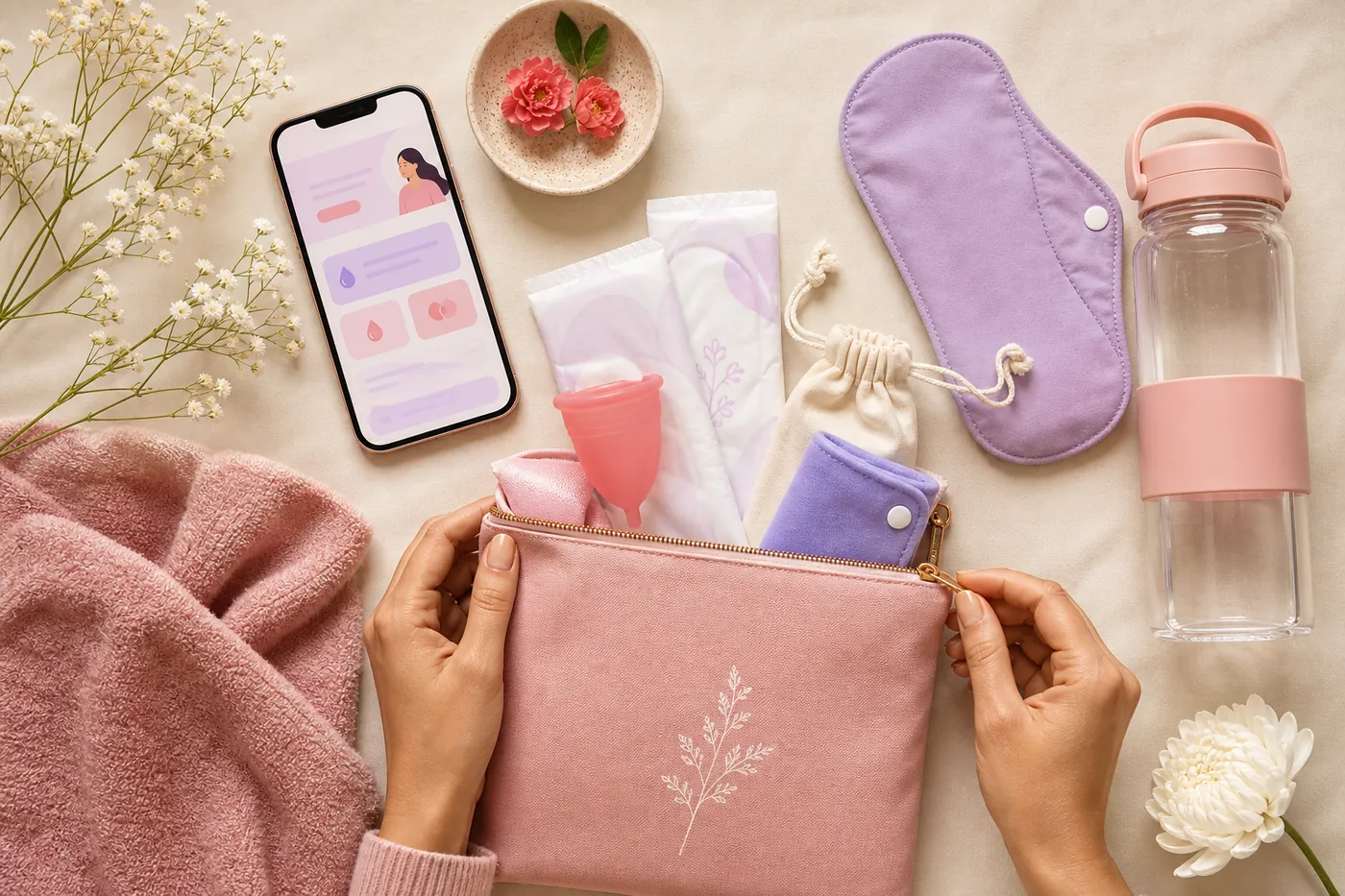
Understand how to manage pads, tampons, cups, period underwear, disposal, washing, and hygiene timing in practical everyday situations.

Clora Care Guide
Menstrual hygiene is a daily comfort and health priority during periods. Clora supports clean, informed, stigma-free period care with guidance around products, routines, symptoms, and hygiene habits.

Understand how to manage pads, tampons, cups, period underwear, disposal, washing, and hygiene timing in practical everyday situations.
Unusual odor, itching, burning, fever, pelvic pain, abnormal discharge, or persistent discomfort should be discussed with a qualified healthcare professional.
Clora presents hygiene education in a calm, approachable way so users can learn without embarrassment or confusion.
There's no universally "best" product — the right choice depends on your flow, comfort, activity level, and access. Most people use a mix depending on the day.
Pads and period underwear are generally changed every 4 to 8 hours depending on flow. Tampons should be changed every 4 to 8 hours and never left in longer than 8 hours. Menstrual cups can often be worn up to 12 hours, but always check the specific product's instructions. As a simple rule: if you're unsure whether it's time to change, it probably is.
Toxic shock syndrome (TSS) is a rare, serious bacterial illness that has been linked to tampon use (and, less commonly, menstrual cups), particularly with high-absorbency products left in for extended periods. Symptoms come on suddenly and can include high fever, low blood pressure, a sunburn-like rash, and vomiting or diarrhea. TSS is a medical emergency — seek care immediately if these symptoms appear during your period, especially while using an internal product.
To reduce risk: use the lowest absorbency that suits your flow, change tampons on schedule, consider alternating with pads, and always remove a tampon before inserting a new one.
When period-related symptoms need medical attention
See a doctor for sudden high fever with a rash during your period, a strong or unusual odor with itching or pain, signs of a forgotten tampon (unusual odor and discharge that doesn't resolve), or any hygiene-related irritation that doesn't improve within a few days.
How Clora Helps
Clora combines health tracking, AI-powered conversations with Clo, gynecology teleconsultation readiness, lab test context, medicine support, and personalized wellness insights in one women's health ecosystem.
Questions
Pads and period underwear should generally be changed every 4 to 8 hours depending on flow. Tampons should be changed at least every 4 to 8 hours and never left in longer than 8 hours. Menstrual cups can typically be worn up to 12 hours, but check the manufacturer's guidance.
Toxic shock syndrome (TSS) is a rare but serious bacterial illness linked to tampon and menstrual cup use, especially with high-absorbency products left in too long. Symptoms include sudden high fever, low blood pressure, a rash, and vomiting or diarrhea, and it requires immediate medical attention.
Use the lowest absorbency tampon needed for your flow, change tampons every 4 to 8 hours, consider alternating with pads, and never leave a tampon in overnight beyond 8 hours.
There's no single best option — it depends on your flow, comfort, lifestyle, and activity level. Many people use different products on different days or combine methods, such as a pad for light days and a cup or tampon for heavier days.
Unsafe hygiene practices can increase irritation and infection risk, so clean routines and timely medical care matter.
A mild odor is normal, especially by the end of the day. A strong, unusual, or fishy odor, especially with itching or unusual discharge, can indicate an infection and is worth checking with a doctor.
No. The vagina is self-cleaning. Washing the outer vulva area with warm water is enough; douching or internal washing can disrupt natural bacterial balance and increase infection risk.