Track irregular patterns
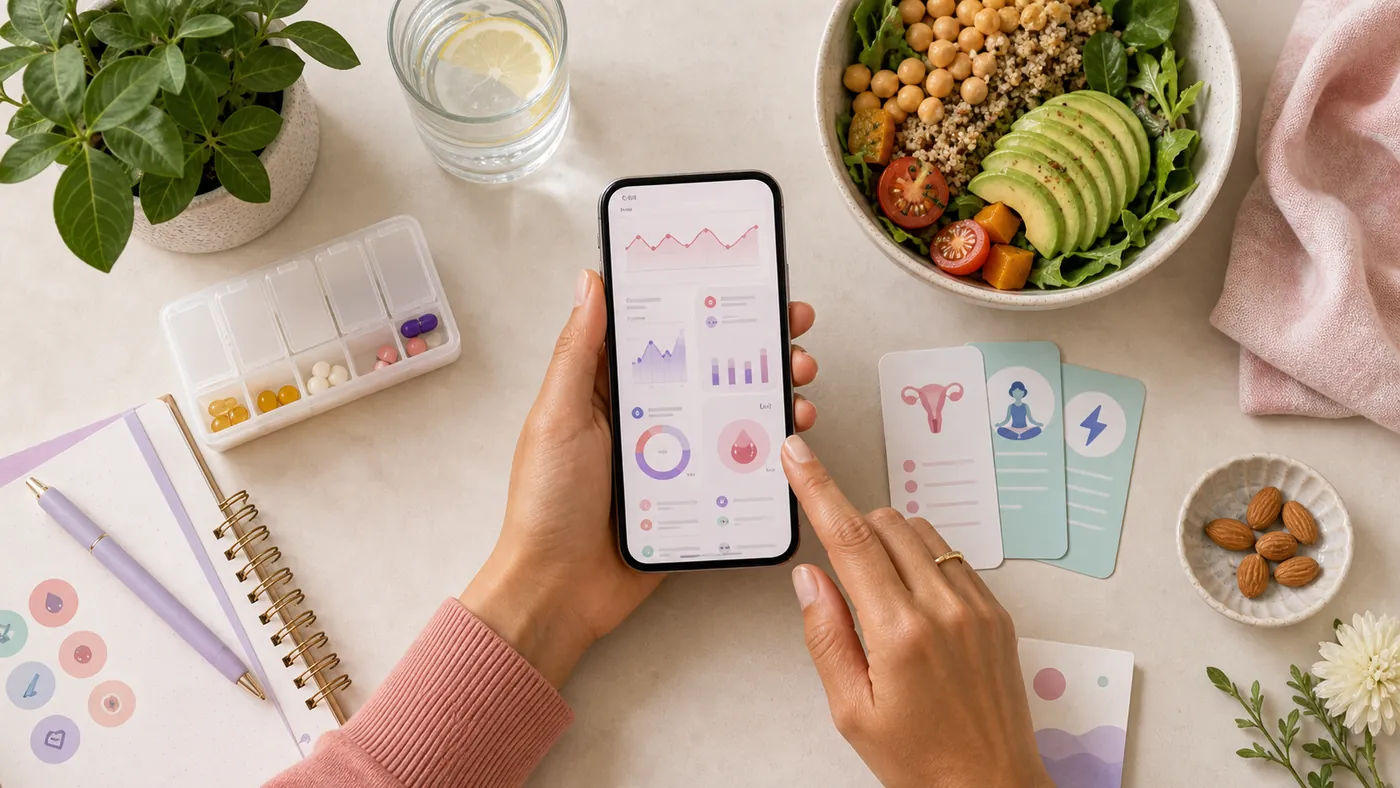
Log missed periods, long cycles, heavy flow, acne, hair growth changes, weight fluctuations, mood shifts, cravings, and lifestyle factors that may matter during care.

Clora Care Guide
PCOD and PCOS can affect periods, hormones, skin, weight, mood, insulin balance, and fertility. Clora helps users organize symptoms and care conversations without turning complex health needs into guesswork.

Log missed periods, long cycles, heavy flow, acne, hair growth changes, weight fluctuations, mood shifts, cravings, and lifestyle factors that may matter during care.
Clora helps you bring clearer context to gynecology or endocrinology consultations for diagnosis, treatment planning, labs, and follow-ups.
PCOD and PCOS require individualized clinical guidance. Clora can support awareness, but it does not diagnose or prescribe medication.
In everyday conversation, especially in India, "PCOD" and "PCOS" are often used interchangeably, but they're not clinically identical. PCOS (polycystic ovary syndrome) is a hormonal and metabolic condition where the ovaries produce higher-than-typical levels of androgens, which can prevent regular ovulation. PCOD (polycystic ovarian disease) is a broader, less strictly defined term for ovaries releasing multiple immature or partially mature eggs, which can eventually turn into cysts. PCOS is generally considered the more significant hormonal condition of the two. A gynecologist or endocrinologist can tell you which term applies to your specific case, and an online gynecologist consultation is often enough for that first conversation.
Symptoms vary widely from person to person, and you don't need to have all of them to have PCOD/PCOS. Common signs include:
The exact cause isn't fully understood, but three factors are consistently linked to it: insulin resistance (which raises androgen production), higher-than-typical androgen levels, and genetics — PCOS often runs in families. Excess weight can worsen insulin resistance and symptoms, but PCOS also occurs in people who are not overweight.
PCOS is one of the most common endocrine conditions affecting women of reproductive age. Indian studies report a wide prevalence range — roughly 4% to 22% depending on the region studied, the age group, and which diagnostic criteria were applied. That spread isn't a contradiction: the Rotterdam criteria identify more women than the older, narrower definitions, and urban and clinic-based samples tend to report higher rates than rural community samples. What the numbers consistently show is that PCOS is common, frequently under-diagnosed, and often identified years after symptoms first appear.
Delayed diagnosis matters because the metabolic side of PCOS — insulin resistance in particular — is easier to manage early. Many women in India first seek help for irregular periods, unwanted hair growth or difficulty conceiving, and only then learn those symptoms share a single underlying explanation.
There's no single test for PCOS. Doctors typically look at a combination of factors: your period history and symptoms, a pelvic ultrasound to check the ovaries, and blood tests to measure hormone levels and rule out thyroid or other conditions. Many clinicians use the Rotterdam criteria, which requires at least two of three features: irregular ovulation, signs of excess androgens, and polycystic ovaries on ultrasound.
Tests a doctor may order include LH and FSH, total and free testosterone, DHEAS, prolactin, TSH (to rule out thyroid disorders, which can mimic PCOS), fasting glucose and fasting insulin or HbA1c to assess insulin resistance, a lipid profile, and sometimes AMH. A pelvic or transvaginal ultrasound looks at ovarian appearance and follicle count. Importantly, polycystic-appearing ovaries on a scan alone do not equal PCOS — many women have them without the syndrome, which is exactly why the diagnosis requires more than one criterion.
Bring cycle dates to the appointment if you have them — tracking your cycle for a few months makes this straightforward. A record of how long your cycles actually run, across several months, is often the single most useful piece of information a clinician can have, and it's the thing most people can't recall accurately from memory.
Lifestyle change is the first-line management approach for PCOS in most clinical guidelines, primarily because it targets insulin resistance, which drives much of the hormonal picture. A few things are reasonably well supported:
None of this replaces medical treatment where it's indicated — it works alongside it.
PCOS is one of the most common causes of ovulation-related fertility difficulty, but it does not mean infertility. Many people with PCOS conceive naturally, and others do so with medical support such as ovulation-inducing medication. Beyond fertility, unmanaged PCOS is also associated with a higher long-term risk of type 2 diabetes, high cholesterol, high blood pressure, and endometrial issues from infrequent periods — which is why ongoing monitoring matters even when you're not trying to conceive.
When to see a doctor about PCOD/PCOS
See a gynecologist or endocrinologist if your periods are consistently irregular or absent, if you notice new or worsening hair growth, acne, or hair thinning, if you're struggling to conceive after 12 months of trying (or 6 months if you're over 35), or if you have a family history of PCOS or diabetes and want to understand your risk.
How Clora Helps
Clora combines health tracking, AI-powered conversations with Clo, gynecology teleconsultation readiness, lab test context, medicine support, and personalized wellness insights in one women's health ecosystem.
Questions
In everyday use in India the terms are often used interchangeably. Clinically, PCOS (polycystic ovary syndrome) is a hormonal and metabolic disorder affecting ovulation, while PCOD (polycystic ovarian disease) is a broader term for ovaries producing many immature or partially mature eggs. A doctor can clarify which applies to you.
Common symptoms include irregular or missed periods, excess facial or body hair growth, acne, scalp hair thinning, weight gain (especially around the abdomen), and difficulty losing weight. Not everyone has every symptom.
The exact cause isn't fully understood, but insulin resistance, higher androgen (male hormone) levels, and genetics are all thought to play a role. Family history of PCOS or type 2 diabetes can increase risk.
There is no outright cure, but symptoms can be effectively managed with lifestyle changes, medication, and regular monitoring. Many people with PCOS lead healthy lives once it's managed with a doctor's guidance.
PCOS can make ovulation less predictable, which may make conceiving take longer, but it does not mean infertility. Many people with PCOS conceive naturally or with medical support such as ovulation induction.
For many people, even a modest weight reduction (5 to 10 percent of body weight) can improve insulin sensitivity, help regulate periods, and ease other symptoms, though this varies from person to person.
No. PCOS diagnosis requires a qualified clinician and may involve symptoms, ultrasound, blood tests, and medical history.
There is no single confirmatory test. Doctors commonly order LH and FSH, total and free testosterone, DHEAS, prolactin, TSH to rule out thyroid disorders, fasting glucose and fasting insulin or HbA1c to assess insulin resistance, a lipid profile, and sometimes AMH, alongside a pelvic ultrasound. Diagnosis is based on the overall pattern, usually using the Rotterdam criteria, not on any one result.
There is no single PCOS diet. The pattern that tends to help is one that moderates refined carbohydrates and added sugar while emphasising fibre, protein and whole grains, because it supports insulin sensitivity. Sustainability matters more than restriction — a dietitian can adapt guidance to what you already eat rather than replacing your diet entirely.
Yes. PCOS occurs across the weight spectrum, including in women with a normal BMI. Lean PCOS is sometimes diagnosed later because the presentation doesn't match the commonly assumed picture.
No. Neither marriage nor childbirth changes the underlying condition. Symptoms can shift over time and pregnancy may temporarily alter cycles, but PCOS is a long-term condition that benefits from ongoing management.
The multiple small follicles visible on an ultrasound in PCOS are not the same as a large ovarian cyst requiring surgical removal. They are immature follicles, and their presence alone is not a reason for surgery.