Understand your cycle signals
Track flow, pain, energy, discharge, sleep, digestion, and mood together so your menstrual health picture becomes clearer over time.

Clora Care Guide
Menstrual health is more than a monthly date on a calendar. Clora helps you understand cycle patterns, body signals, cramps, flow changes, mood shifts, and the moments when medical support may help.
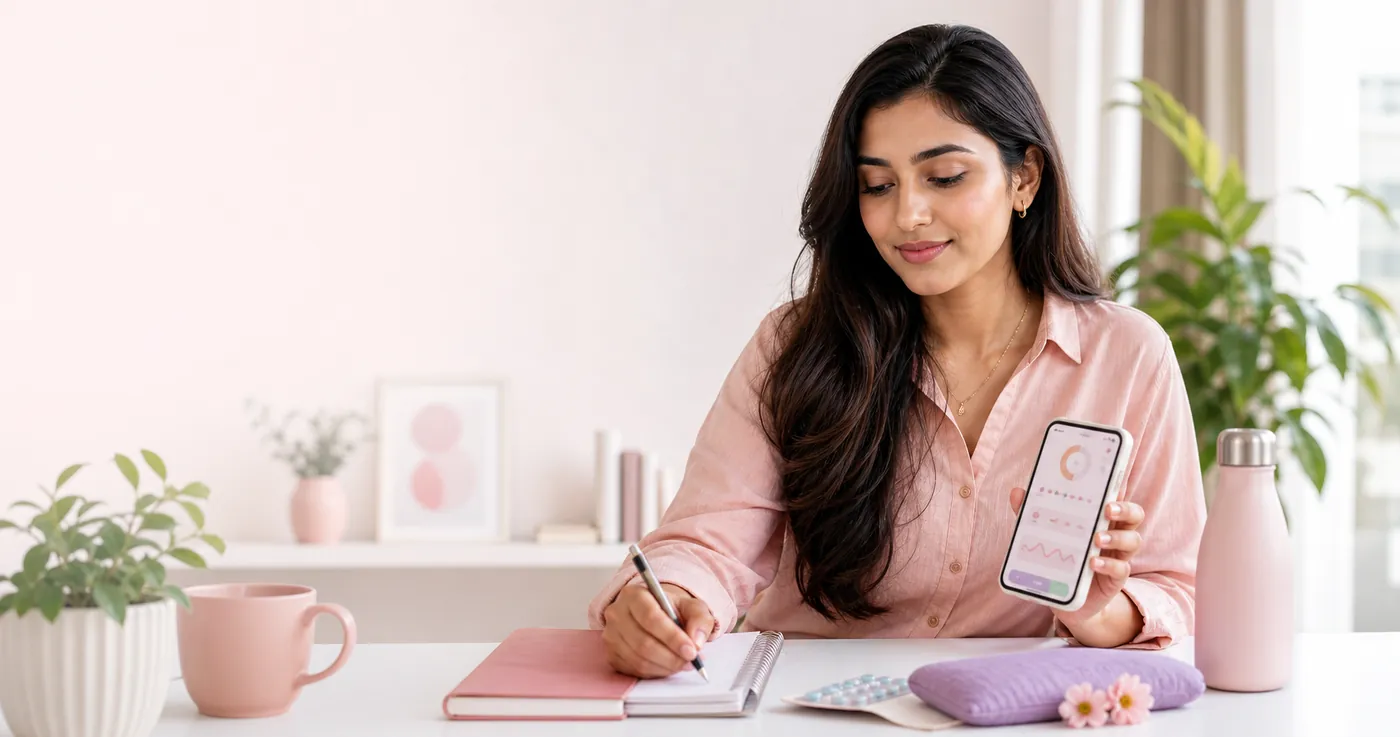
Track flow, pain, energy, discharge, sleep, digestion, and mood together so your menstrual health picture becomes clearer over time.
Clora encourages professional care for severe pain, abnormal bleeding, missed periods, unusual discharge, dizziness, fever, or symptoms that feel new or worsening.
Use insights from your cycle history to prepare for upcoming phases, discuss concerns with doctors, and make daily wellness choices with more confidence.
Menstrual health covers far more than the days you bleed. It's the full picture of how your hormones, ovaries, uterus, and brain work together across a roughly month-long cycle — and how that cycle affects your energy, skin, mood, sleep, and digestion along the way. Good menstrual health doesn't mean a pain-free or perfectly clockwork period; it means understanding your own normal well enough to notice when something changes.
A menstrual cycle is counted from the first day of one period to the first day of the next. Most cycles fall between 21 and 35 days, with bleeding itself lasting anywhere from 2 to 7 days. Cycle length can vary from month to month, especially in the years right after your first period and again during perimenopause, so a little natural variation is expected.
What matters more than hitting a textbook number is consistency for you. A cycle that's reliably 26 days is just as normal as one that's reliably 32 days. It's a sudden or sustained change from your own pattern — periods that stop, become much heavier, or shift by a week or more — that's worth paying attention to.
Cramping in the lower abdomen during the first 1 to 3 days of a period is caused by the uterus contracting to shed its lining, and it's one of the most common menstrual symptoms. Mild to moderate cramps that respond to heat, rest, or over-the-counter pain relief are typically not a cause for concern. Pain that's severe, disrupts school, work, or sleep, or is getting worse cycle after cycle can point to conditions like endometriosis or fibroids and deserves a clinical evaluation.
Soaking through a pad or tampon every hour for several consecutive hours, passing clots larger than a coin, needing to change protection during the night, or bleeding for more than 7 days are all signs of heavy menstrual bleeding (sometimes called menorrhagia). This can lead to iron-deficiency anemia over time and is worth discussing with a gynecologist — an online gynecologist consultation is often the quickest way to get it reviewed.
Occasional variation is normal, but periods that are consistently unpredictable, far apart, or absent for three months or more (in someone who isn't pregnant, breastfeeding, or approaching menopause) can be linked to PCOD/PCOS, thyroid disorders, extreme stress, low body weight, or over-exercising.
Premenstrual syndrome (PMS) — bloating, breast tenderness, irritability, low mood, and fatigue in the one to two weeks before a period — is extremely common. A smaller number of people experience premenstrual dysphoric disorder (PMDD), a more intense form involving severe mood symptoms that interfere with daily life. PMDD is a recognized clinical condition and usually responds well to proper treatment, so it's worth raising with a doctor rather than managing alone.
Hormonal shifts sit behind most menstrual symptoms, but the everyday triggers are often surprisingly ordinary: high stress, poor sleep, sudden weight change, restrictive dieting, intense training loads, and travel across time zones can all delay ovulation or change flow. Underlying causes that need medical attention include PCOD/PCOS, thyroid dysfunction, fibroids, endometriosis, and, less commonly, bleeding disorders.
When to see a doctor about your period
Book a gynecology consultation if you have periods that stop for 3+ months without pregnancy, bleeding that soaks through protection hourly, periods lasting more than 7 days, severe pain that interferes with daily life, bleeding between periods or after sex, or any new symptom that feels significantly different from your usual pattern.
A cycle is generally considered irregular when its length varies by more than about 7–9 days from month to month, when it falls outside the 21–35 day range, or when periods stop for three months or more without pregnancy. Occasional variation is normal — a single late or early cycle after a stressful month usually isn't a medical problem. A sustained pattern change is what deserves attention.
The most common underlying reasons include:
Because several of these are detected with simple blood tests, an irregular-cycle workup is usually straightforward. Bring a record of your actual cycle dates — it's the most useful thing you can hand a clinician, and almost nobody remembers it accurately without tracking your cycle.
Pregnancy is the first thing to rule out if you're sexually active, and a home test taken after a missed period is reliable. Beyond that, a delayed period most often reflects delayed ovulation rather than a missing one: the second half of the cycle (after ovulation) stays fairly fixed at around 12–14 days, so anything that pushes ovulation later — illness, travel, a stressful few weeks, disrupted sleep, a sharp change in exercise or eating — pushes the period later too.
One late cycle usually resolves on its own. See a doctor if you've missed three cycles in a row, if late periods become your new pattern, or if a delay comes with other symptoms such as unusual hair growth, significant weight change, persistent fatigue or milky nipple discharge.
Cramping is driven largely by prostaglandins, compounds that make the uterus contract to shed its lining. Higher prostaglandin levels mean stronger contractions and more pain. That mechanism explains why the interventions below work:
Pain that stops you attending school, work or daily life, pain that's worsening over time, or pain that doesn't respond to the measures above is not something to simply endure. Persistent severe period pain can point to endometriosis, adenomyosis or fibroids — conditions that are frequently diagnosed years late precisely because severe pain gets normalised.
Most girls start menstruating between about 10 and 15 years of age. For the first year or two, cycles are commonly irregular — this is expected while the hormonal feedback loop matures, and doesn't usually indicate a problem. Cycle length in adolescents can normally range wider than in adults, roughly 21 to 45 days.
Worth checking with a doctor: no period by age 15, no period within about three years of breast development starting, periods that soak through protection hourly, periods lasting longer than seven days, or pain severe enough to miss school regularly.
A number of beliefs about menstruation remain widespread across India, and several of them actively restrict women's lives or delay care. For clarity:
How Clora Helps
Clora combines health tracking, AI-powered conversations with Clo, gynecology teleconsultation readiness, lab test context, medicine support, and personalized wellness insights in one women's health ecosystem.
Questions
Most cycles range from 21 to 35 days, counted from the first day of one period to the first day of the next, and periods usually last 2 to 7 days. What matters most is what is typical for you and whether that pattern changes.
Stress, significant weight changes, intense exercise, thyroid conditions, PCOD/PCOS, perimenopause, and some medications can all disrupt cycle regularity. Periods that are consistently irregular are worth discussing with a doctor.
Mild to moderate cramping in the first 1 to 3 days is common. Pain that stops you from going about your day, doesn't respond to over-the-counter relief, or is getting worse over time is not something to just push through and should be evaluated.
Soaking through a pad or tampon every hour for several hours, passing large clots, needing to change protection overnight, or periods lasting longer than 7 days can indicate heavy menstrual bleeding, which should be reviewed by a doctor.
Yes. High stress, rapid weight loss or gain, restrictive dieting, and over-exercising can all delay ovulation or stop periods temporarily by affecting the hormones that regulate the cycle.
PMS involves physical and emotional symptoms in the days before a period. PMDD (premenstrual dysphoric disorder) is a more severe form with intense mood symptoms that can significantly affect daily life and usually needs clinical support.
A late period usually means ovulation happened later than usual, because the phase after ovulation stays fairly fixed at around 12–14 days. Illness, travel, sustained stress, disrupted sleep, and sharp changes in exercise or eating can all delay ovulation. One late cycle typically resolves on its own; see a doctor if you miss three cycles in a row or lateness becomes your pattern.
Day 1 is the first day of proper bleeding, not spotting. Your cycle length is the number of days from Day 1 of one period up to the day before your next period starts. Counting from the end of a period is the most common mistake and makes cycles look shorter than they are.
Anti-inflammatory painkillers such as ibuprofen or mefenamic acid work best when taken at the first sign of pain, because they reduce the prostaglandins that cause uterine contractions. Heat applied to the lower abdomen has good evidence, and light movement usually helps more than complete rest. Pain that stops you functioning, or that is worsening, should be assessed rather than endured.
Most girls start between about 10 and 15, and cycles are commonly irregular for the first year or two while hormones settle. See a doctor if there is no period by age 15, no period within roughly three years of breast development beginning, bleeding that soaks through protection hourly, periods lasting more than seven days, or pain severe enough to miss school regularly.
Yes to all three. Bathing and hair washing are safe and hygiene during menstruation matters. Exercise is safe and often reduces cramps. Menstrual blood does not spoil food or plants — there is no mechanism for that, and these restrictions have no medical basis.
No. Clora provides educational insights and helps you organize symptoms, but diagnosis must come from a qualified healthcare professional.